Should I Ditch the Pacifier?
A Tiny Bites article: Quick answers on questions you’re actually asking.
Sarah Welsh, MEd, BCBA, COBA, TVI
Q: My kid is almost two. Isn't it time to ditch the pacifier?
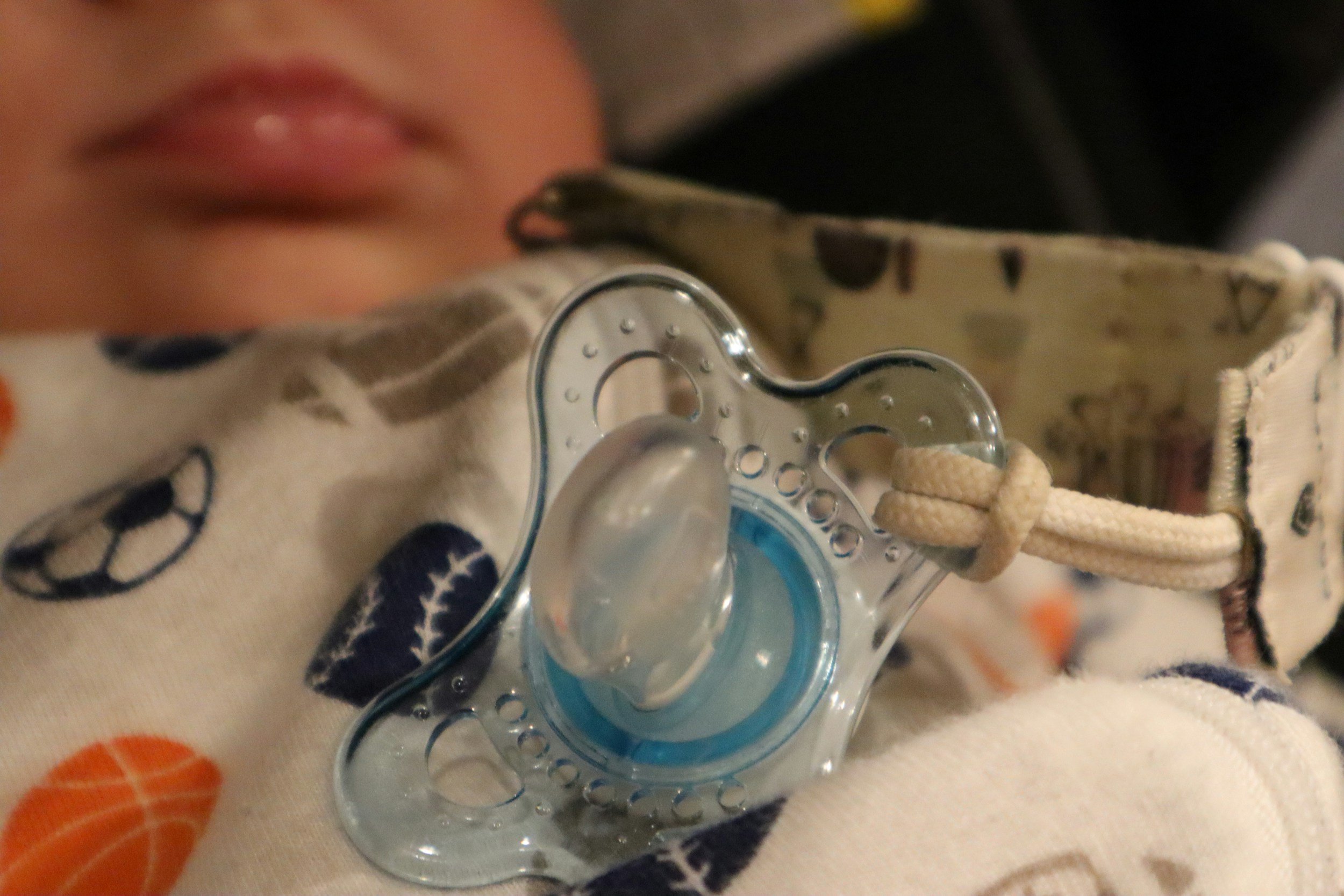
Ditching the pacifier feels like an age-based milestone, but it’s more about is your child ready?
Parents are asking themselves this as soon as their child begins to walk. Or when they bump up a room at childcare and suddenly the other children seem so much older than your child. To keep up with the other children and meet the same milestone, you begin weaning your own toddler.
But a pacifier isn't a bad habit, it's a tool your child is using. To regulate and calm their nervous system, to manage big feelings, and to self-soothe when they're overwhelmed. It's actually working as it should.
So when you decide it's time to take it away, because your neighbor said she saw a special on how bad they are, or because you saw your friends’ children have stopped using one, or because you just feel like it's the right age, ask yourself first: What am I replacing it with?
Because here's what I see happen. Parents wean off the pacifier, the bottle, and breastfeeding all around the same time. Eighteen months. Twenty months. Right? It feels like a milestone. Then, surprise surprise, their kid starts biting and suddenly there's a "biting problem." But here's what actually happened: you took away their tool for oral sensory input and regulation without giving them anything else to do with that need. Their mouth still wants that input, their nervous system still needs to regulate… So they bite a peer.
The pacifier wasn't a problem. It was the solution you’d given your child.
If you're going to wean, do it intentionally. Teach your child when and why they use the pacifier, "We use our paci to help us calm down at bedtime" or "Paci helps us when we're upset." Make it purposeful, not just always available. Then, and this is crucial (and overlooked), give them other tools that do the same job. A chewy. A teething toy. A snack. Something that meets that sensory need in a way that still works for your family.
Don't just take away a tool without handing them something else. Your kid isn't being difficult. They're just looking for what they lost.